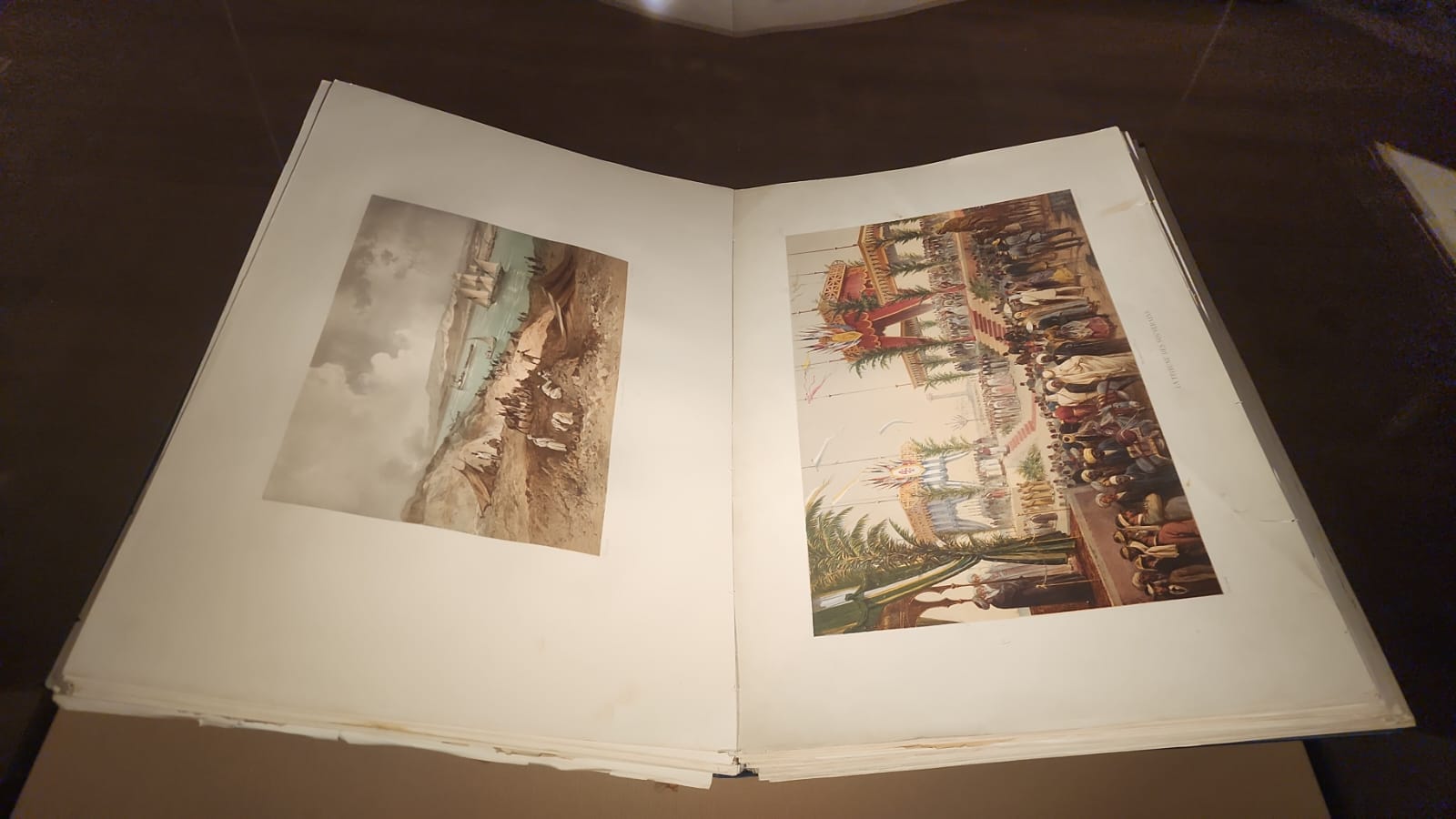
رحلة الإمبراطورة أوجيني لحضور حفل افتتاح قناة السويس 1869
Empress Eugénie’s journey for the inauguration ceremony of the Suez Canal in 1869
الوصف التفصيلي للمقتنى
تعرف على تاريخ وأهمية هذه القطعة الأثرية
ألبوم يوثق رحلة الإمبراطورة أوجيني خلال حفل افتتاح قناة السويس عام 1869. كانت الإمبراطورة أوجيني، زوجة الإمبراطور الفرنسي نابليون الثالث، من أبرز الشخصيات المدعوة لحضور حفل الافتتاح الأسطوري لقناة السويس. حضرت الامبراطورة أوجينى زوجة امبراطور فرنسا إلى مصر دون زوجها بسبب انشغاله بالظروف السياسية التى كانت تمر بها بلاده فى هذا التوقيت، وتمتعت الامبراطورة أوجينى بالجمال والذكاء الحاد واحتفى بها الخديوى اسماعيل فى هذا التوقيت بشكل كبير، حيث وصلت إلى مصر قبل ثلاثة أسابيع من الاحتفال بافتتاح قناة السويس فى 16 نوفمبر 1869 وزارت عددا من الأماكن السياحية فى مصر منها زيارة إلى مدينة الأقصر وتفقدت خلالها الآثار المصرية بها. وأعجبت امبراطورة فرنسا بحفل افتتاح قناة السويس الذى أشرف عليه ديلسبس وحضره ضيوف من مختلف دول العالم فى هذا التوقيت وخصص له الخديوى اسماعيل ألف خادم ليكونوا فى خدمة آلاف الضيوف ، تم دعوتهم لحضور حفل الافتتاح الضخم، لتعبر أوجينى عن مشاهد هذا الحفل بقولها: "لم أر فى حياتى أرفع ولا أروع من هذا الحفل الشرفى الضخم" . افتتح الخديو اسماعيل مشروع قناة السويس بعد سنوات من العمل به، وكان ذلك الحدث في وقتها هو الأبرز على المستوى العالمي، خاصة بعد الأبهة التي أصر الخديوى على الظهور بها، حيث بلغت تكلفة الحفل 2 مليون و400 ألف جنيه.ووصل عدد الضيوف بمدينة الإسماعيلية أثناء حفلات القناة يومى 17- 18 نوفمبر 1869 على أقل تقدير 100 ألف من الأجانب والمصريين، وشيدت دار الأوبرا فى 5 أشهر بتكلفة 160 ألف جنيه.وأرسلت الصحف الأجنبية مراسلين لها لتغطية أنباء الاحتفال وبدأ المدعوون بالحضور إلى الإسكندرية منذ يوم 15 أكتوبر 1869، وأعدت لهم رحلات إلى الوجه القبلى عبر النيل فى السفن التى أعدت وجهزت لهذا الغرض وذلك قبل بدء المهرجان الرسمى للافتتاح.
An album documenting the visit of Empress Eugénie during the inauguration ceremony of the Suez Canal in 1869. Empress Eugénie, the wife of the French Emperor Napoleon III, was among the most prominent figures invited to attend the legendary opening ceremony of the Suez Canal. Empress Eugénie traveled to Egypt without her husband due to the political circumstances that France was experiencing at that time. Known for her beauty and sharp intelligence, she was warmly received and highly honored by Khedive Ismail. She arrived in Egypt three weeks before the official inauguration of the canal on 16 November 1869 and visited several tourist destinations across the country, including a trip to Luxor, where she toured and admired the ancient Egyptian monuments. The Empress was deeply impressed by the grand opening ceremony of the Suez Canal, which was organized under the supervision of Ferdinand de Lesseps and attended by distinguished guests from many countries around the world. Khedive Ismail allocated one thousand servants to serve the thousands of invited guests during the magnificent celebrations. Reflecting on the event, Empress Eugénie reportedly said: "I have never seen in my life anything more magnificent or more splendid than this grand ceremonial celebration." Khedive Ismail inaugurated the Suez Canal after years of work on the project. At the time, the event was considered one of the most remarkable international occasions, especially due to the extraordinary grandeur that the Khedive insisted upon displaying. The cost of the celebrations reached 2.4 million Egyptian pounds. During the festivities on 17–18 November 1869, the number of guests in the city of Ismailia was estimated at no less than 100,000 Egyptians and foreigners. The Khedivial Opera House in Cairo was constructed in just five months at a cost of 160,000 pounds. Foreign newspapers also sent correspondents to cover the historic event. Guests began arriving in Alexandria as early as 15 October 1869, and special Nile cruises were organized for them to travel through Upper Egypt before the official opening celebrations began.
Un album documentant la visite de l’Impératrice Eugénie à l’occasion de la cérémonie d’inauguration du canal de Suez en 1869. L’impératrice Eugénie, épouse de l’empereur français Napoléon III, figurait parmi les personnalités les plus importantes invitées à assister à la célèbre inauguration du canal de Suez. L’impératrice Eugénie se rendit en Égypte sans son époux, en raison des circonstances politiques que traversait la France à cette époque. Réputée pour sa beauté et son intelligence remarquable, elle fut chaleureusement accueillie et honorée par le Khédive Ismaïl. Elle arriva en Égypte trois semaines avant l’inauguration officielle du canal, le 16 novembre 1869, et visita plusieurs sites touristiques, notamment la ville de Louxor, où elle découvrit et admira les monuments de l’Égypte antique. L’impératrice fut profondément impressionnée par la grande cérémonie d’inauguration du canal de Suez, organisée sous la supervision de Ferdinand de Lesseps et à laquelle participèrent des invités venus de nombreux pays du monde. Le Khédive Ismaïl mit à la disposition des invités mille serviteurs afin de servir les milliers de participants à ces festivités grandioses. À propos de cet événement, l’impératrice Eugénie déclara : "Je n’ai jamais vu de ma vie une cérémonie aussi grandiose et aussi magnifique." Le Khédive Ismaïl inaugura le canal de Suez après plusieurs années de travaux. Cet événement fut alors considéré comme l’un des plus importants au niveau international, notamment en raison du faste exceptionnel que le Khédive avait tenu à lui conférer. Le coût des célébrations atteignit 2,4 millions de livres égyptiennes. Lors des festivités des 17 et 18 novembre 1869, la ville d’Ismaïlia accueillit au moins 100 000 invités, Égyptiens et étrangers. L’Opéra khédivial du Caire fut construit en seulement cinq mois, pour un coût de 160 000 livres. Les journaux étrangers envoyèrent également des correspondants pour couvrir cet événement historique. Les invités commencèrent à arriver à Alexandrie dès le 15 octobre 1869, et des croisières spéciales sur le Nil furent organisées pour leur permettre de visiter la Haute-Égypte avant le début officiel des célébrations.