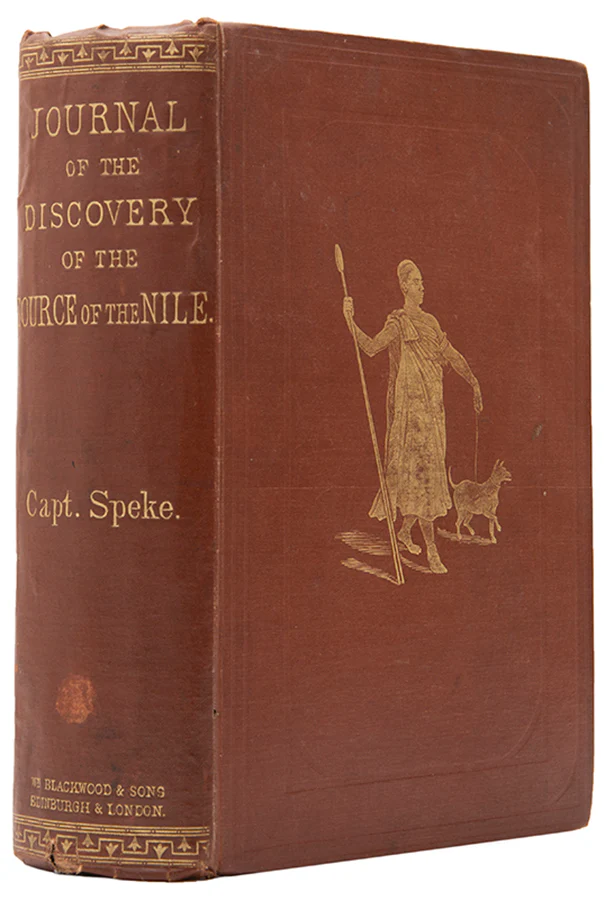
يوميات اكتشاف منابع النيل 1863
Journal of The Discovery of The Source of the Nile 1863
الوصف التفصيلي للمقتنى
تعرف على تاريخ وأهمية هذه القطعة الأثرية
يُعد كتاب «يوميات اكتشاف منابع النيل» الصادر عام 1863 من أهم مؤلفات الرحالة البريطاني John Hanning Speke، الذي سعى إلى حل أحد أكبر الألغاز الجغرافية في القرن التاسع عشر: تحديد مصدر نهر النيل. يسرد الكتاب تفاصيل رحلته الاستكشافية في شرق إفريقيا برفقة جيمس غرانت، بدعم من الجمعية الجغرافية الملكية البريطانية. يقدّم المؤلف وصفًا دقيقًا للمشاهد الطبيعية والقبائل الإفريقية التي التقاها، إلى جانب التحديات الصحية والمناخية التي واجهت البعثة. يركز الكتاب على إعلان سبيك أن بحيرة فيكتوريا هي المصدر الرئيسي للنيل الأبيض، وهو اكتشاف أثار جدلًا علميًا واسعًا في الأوساط الجغرافية آنذاك. كما يتضمن خرائط ورسومًا توضيحية ساهمت في توسيع المعرفة الأوروبية بجغرافية حوض النيل. يمثل هذا العمل وثيقة تاريخية مهمة في أدبيات الاستكشاف، إذ يعكس روح المغامرة والتنافس العلمي في عصر الإمبراطورية. وقد أسهم في تعزيز الاهتمام الدولي بمنطقة شرق إفريقيا ومصادر المياه الكبرى في القارة. لذلك، تبقى إنجازات سبيك وغرانت غير محلّ جدل: فقد كانا أول أوروبيين يعبران شرق أفريقيا الاستوائية، وأسفرت رحلاتهما عن إضافة أكثر من 500 ميل إلى المعرفة الجغرافية للمنطقة. واليوم تُعتبر بحيرة فيكتوريا وروافدها مصادر النيل الأبيض.
The book Journal of the Discovery of the Source of the Nile, published in 1863, is considered one of the most important works of the British explorer John Hanning Speke, who sought to solve one of the greatest geographical mysteries of the nineteenth century: identifying the source of the Nile River. The book recounts the details of his exploratory journey in East Africa alongside James Augustus Grant, with the support of the Royal Geographical Society. The author provides a detailed description of the natural landscapes and African communities he encountered, as well as the health and climatic challenges faced by the expedition. The book focuses on Speke’s declaration that Lake Victoria is the principal source of the White Nile—an announcement that sparked considerable scientific debate within geographical circles at the time. It also includes maps and illustrations that helped expand European knowledge of the Nile Basin’s geography. This work represents an important historical document in the literature of exploration, reflecting the spirit of adventure and scientific rivalry characteristic of the imperial era. It contributed significantly to international interest in East Africa and the continent’s major water sources. Speke and Grant’s achievements remain noteworthy: they were among the first Europeans to traverse equatorial East Africa, and their journeys added more than 500 miles to the geographical knowledge of the region. Today, Lake Victoria and its tributaries are recognized as the sources of the White Nile.
L’ouvrage Journal of the Discovery of the Source of the Nile, publié en 1863, est considéré comme l’un des plus importants travaux de l’explorateur britannique John Hanning Speke, qui chercha à résoudre l’un des plus grands mystères géographiques du XIXᵉ siècle : l’identification de la source du Nil. Le livre relate en détail son expédition en Afrique de l’Est aux côtés de James Augustus Grant, avec le soutien de la Royal Geographical Society. L’auteur y décrit avec précision les paysages naturels et les communautés africaines rencontrées, ainsi que les difficultés sanitaires et climatiques auxquelles l’expédition fut confrontée. L’ouvrage met l’accent sur la déclaration de Speke affirmant que Lake Victoria constitue la principale source du Nil Blanc, une affirmation qui suscita un large débat scientifique dans les milieux géographiques de l’époque. Il comprend également des cartes et des illustrations qui contribuèrent à élargir les connaissances européennes sur la géographie du bassin du Nil. Ce livre constitue un document historique majeur dans la littérature d’exploration, reflétant l’esprit d’aventure et la rivalité scientifique propres à l’ère impériale. Il a renforcé l’intérêt international pour l’Afrique de l’Est et pour les grandes sources hydriques du continent. Les réalisations de Speke et Grant demeurent remarquables : ils furent parmi les premiers Européens à traverser l’Afrique orientale équatoriale, et leurs expéditions permirent d’ajouter plus de 500 miles aux connaissances géographiques de la région. Aujourd’hui, le lac Victoria et ses affluents sont reconnus comme les sources du Nil Blanc.