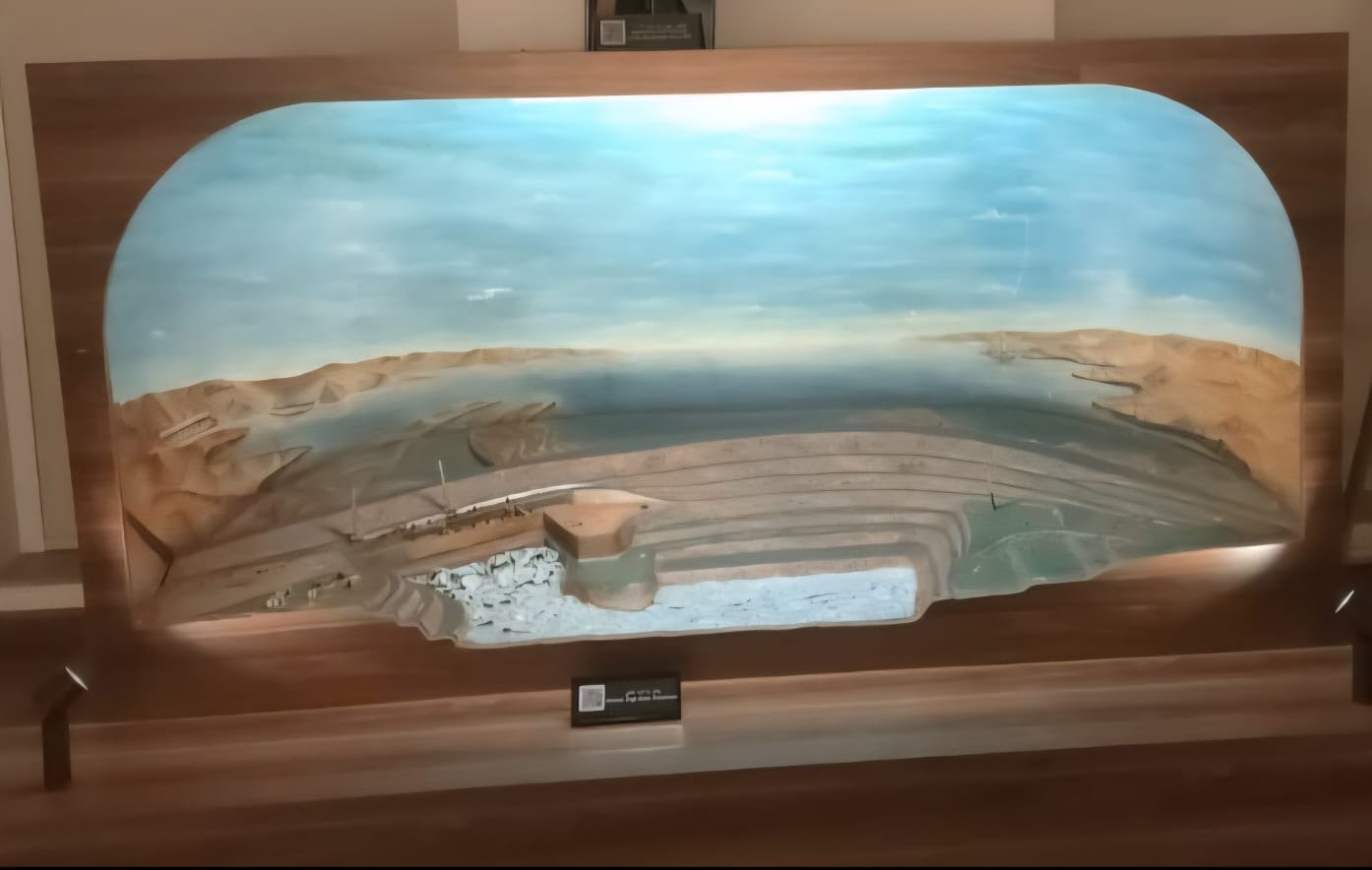
بانوراما السد العالي
Aswan High Dam Panorama
الوصف التفصيلي للمقتنى
تعرف على تاريخ وأهمية هذه القطعة الأثرية
السد العالي بأسوان، هو سد مائي في جنوب مصر. يقع على نهر النيل في أقصى جنوب البلاد بمحافظة أسوان، ويُعد الركيزة الأساسية لمشروع التحكم الكامل في مياه النيل وتنظيم فيضانه. بدأ تشييده عام 1960 خلال عهد الرئيس جمال عبد الناصر، بمساهمة مالية وفنية كبيرة من الاتحاد السوفييتي الذي قدّم الدعم في إطار التعاون المصري–السوفييتي آنذاك. تملك السد وتشرف على تشغيله الهيئة العامة للسد العالي وخزان أسوان. وقد أدى بناؤه إلى إحداث تحول كبير في إدارة الموارد المائية المصرية، إذ مكّن من التحكم في تدفق مياه النيل ومنع تكرار كوارث الفيضان والجفاف، إلى جانب دوره الحيوي في توليد الطاقة الكهرومائية وتوسيع الرقعة الزراعية وتحسين الري. يبلغ طول السد نحو 3600 متر، وارتفاعه 111 مترًا، وعرض قاعدته 980 مترًا، بينما يبلغ عرض قمته 40 مترًا. يتألف جسم السد من حوالي 43 مليون متر مكعب من الخرسانة المسلحة والحديد ومواد بناء أخرى، ويستطيع تمرير تدفقات مائية تصل إلى 11,000 متر مكعب في الثانية. بلغت تكلفة المشروع الإجمالية مليار دولار أمريكي، ساهم الاتحاد السوفييتي بنحو الثلث منها، وشارك في أعمال الإنشاء حوالي 400 خبير سوفييتي إلى جانب آلاف المهندسين والعمال المصريين. اكتمل بناء السد في عام 1968، وتم تركيب آخر 12 مولدًا كهربائيًا عام 1970، ليُفتتح رسميًا في 15 يناير 1971. وقد أسهم السد العالي في توليد الكهرباء بنسبة كبيرة من احتياجات مصر في سبعينيات القرن العشرين، كما ساهم في استقرار الزراعة وتوفير المياه خلال فترات الجفاف. إلا أن للسد آثارًا بيئية وسلبية، أبرزها انخفاض خصوبة الأراضي الزراعية نتيجة حجز الطمي خلف بحيرة ناصر، وتراجع كميات الرسوبيات التي كانت تغذي دلتا النيل، مما أثار مخاوف من تآكل السواحل وارتفاع مخاطر الغمر البحري على المدى البعيد، خاصة مع تفاقم ظواهر الاحتباس الحراري وذوبان الجليد القطبي.
The Aswan High Dam is a water dam located in southern Egypt. It stands on the Nile River at the country’s far south in Aswan Governorate and represents the cornerstone of the project for full control and regulation of the Nile’s waters and floods. Construction began in 1960 during the presidency of Gamal Abdel Nasser, with substantial financial and technical support from the Soviet Union as part of Egyptian–Soviet cooperation at that time. The dam is owned and operated by the General Authority for the Aswan High Dam and Aswan Reservoir. Its construction marked a major transformation in Egypt’s water resources management, enabling control over the Nile’s flow and preventing recurring flood and drought disasters. It also plays a vital role in hydroelectric power generation, agricultural expansion, and irrigation improvement. The dam is approximately 3,600 meters long and 111 meters high. Its base width reaches 980 meters, while the crest width is about 40 meters. The dam body consists of around 43 million cubic meters of reinforced concrete, steel, and other construction materials. It can pass water flows of up to 11,000 cubic meters per second. The total project cost amounted to about one billion US dollars, with the Soviet Union contributing roughly one-third. Around 400 Soviet experts participated in the construction works, alongside thousands of Egyptian engineers and workers. Construction was completed in 1968, and the final 12 electrical generators were installed in 1970. The dam was officially inaugurated on January 15, 1971. In the 1970s, the Aswan High Dam supplied a significant share of Egypt’s electricity needs and contributed to agricultural stability and water availability during drought periods. However, the dam also had environmental impacts, most notably the decline in soil fertility due to the trapping of silt behind Lake Nasser and the reduction of sediments that once nourished the Nile Delta. This raised concerns about coastal erosion and long-term risks of marine inundation, especially with the intensification of global warming and polar ice melt.
Le barrage d’Assouan est un barrage hydraulique situé dans le sud de l’Égypte. Il est implanté sur le Nil, à l’extrême sud du pays, dans le gouvernorat d’Assouan, et constitue la pierre angulaire du projet de contrôle intégral et de régulation des crues du Nil. Sa construction a débuté en 1960 sous la présidence de Gamal Abdel Nasser, avec un important soutien financier et technique de l’Soviet Union dans le cadre de la coopération égypto-soviétique de l’époque. Le barrage appartient à l’Autorité générale du Haut Barrage d’Assouan et du Réservoir d’Assouan, qui en assure l’exploitation. Sa construction a profondément transformé la gestion des ressources hydriques en Égypte, en permettant de réguler le débit du Nil et d’éviter la répétition des catastrophes liées aux crues et aux sécheresses. Il joue également un rôle essentiel dans la production d’énergie hydroélectrique, l’extension des terres agricoles et l’amélioration de l’irrigation. Le barrage mesure environ 3 600 mètres de long et 111 mètres de haut. La largeur de sa base atteint 980 mètres, tandis que celle de sa crête est d’environ 40 mètres. Son corps est composé d’environ 43 millions de mètres cubes de béton armé, d’acier et d’autres matériaux de construction. Il peut laisser passer des débits pouvant atteindre 11 000 mètres cubes par seconde. Le coût total du projet s’est élevé à environ un milliard de dollars américains, dont près d’un tiers financé par l’Union soviétique. Environ 400 experts soviétiques ont participé aux travaux, aux côtés de milliers d’ingénieurs et d’ouvriers égyptiens. La construction a été achevée en 1968 et les douze derniers générateurs électriques ont été installés en 1970. Le barrage a été officiellement inauguré le 15 janvier 1971. Durant les années 1970, le Haut Barrage d’Assouan a fourni une part importante des besoins électriques de l’Égypte et a contribué à la stabilité agricole et à la disponibilité de l’eau pendant les périodes de sécheresse. Toutefois, il a également engendré des impacts environnementaux, notamment la diminution de la fertilité des sols due à la rétention des sédiments derrière le Lake Nasser et la réduction des apports sédimentaires vers le delta du Nil. Cela a suscité des inquiétudes quant à l’érosion côtière et aux risques d’inondation marine à long terme, en particulier avec l’aggravation du réchauffement climatique et la fonte des glaces polaires.